Group Blog links:
Shubin Wang : https://shubinw.opened.ca/
Eric Ding : https://ericdingedci339.opened.ca/
Hasan Sheikh : https://hsedci339.opened.ca/
Introduction:
Last week, we explored what Virtual Reality (VR) is and examined some ways it is currently being used as a learning tool. We found that VR can create immersive and interactive educational experiences that may not be possible in traditional classrooms. While VR offers many exciting opportunities for learning, it is not a perfect solution. This week, we will explore some of the challenges and limitations that can make it difficult to implement VR effectively in schools and online learning environments.
1. Cost and Access
One of the biggest challenges facing VR in education is the cost and accessibility. While VR technology has become more affordable over time, the cost of headsets, software, maintenance, technical support, and classroom setup can be a significant barrier for many schools. This can prevent adoption for educational institutions and students, particularly in distributed and open learning environments, when the learners may need access to VR equipment at home. This means not all students and schools have equal opportunities to benefit from VR-based learning, making affordability and accessibility important factors to consider when evaluating the future of VR in education.
2. Technical Issues
Several technical challenges may also come up when implementing VR into education. To start, VR systems require significant setup time before lessons can begin. Additionally, the systems may require reliable, high-speed internet infrastructure to operate effectively. Software and hardware will also need to be updated regularly to reduce compatibility issues between VR headsets and computers; otherwise, potential bugs, glitches, crashes, battery-life issues, and connectivity problems with standalone headsets can disrupt learning. This also creates the need for ongoing maintenance schedules and possible technical support staff to troubleshoot problems that may come up in VR education. Furthermore, there is a risk of equipment damage, loss, or theft, especially when headsets are shared among students. Finally, implementing VR infrastructure requires data storage and processing requirements that may exceed current school technology resources.
3. Comfort and Health Concerns
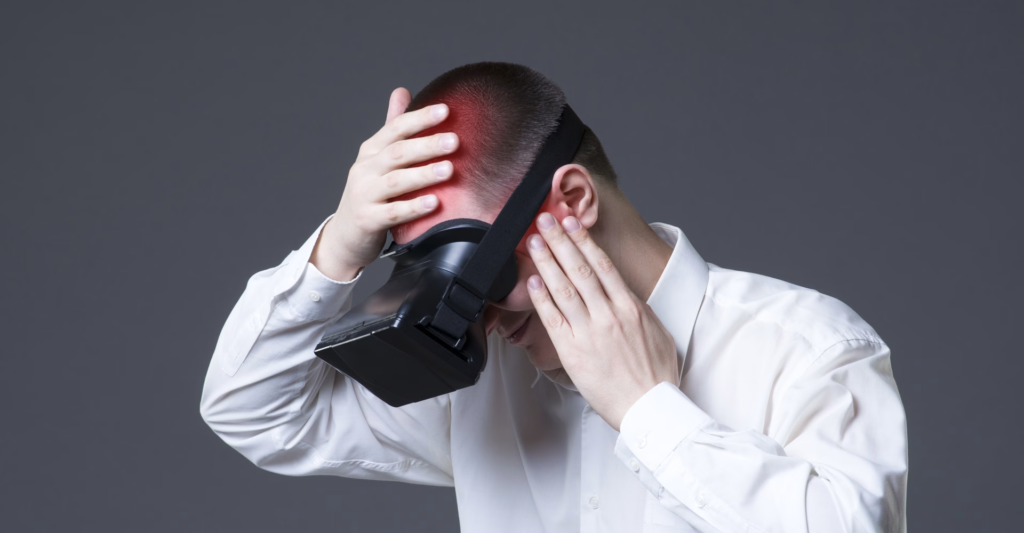
Outside of technical concerns, VR may also pose many health risks. To start, VR can cause motion sickness, which in turn can cause nausea, dizziness, and discomfort. Eye strain and other forms of visual fatigue may also occur after extended use. Headaches and physical discomfort can happen after prolonged use or from heavy or poorly adjusted headsets. Younger students may have difficulty using VR equipment safely and effectively, and constant VR use may also reduce potential social engagement in the classroom environment. Some learners may also experience discomfort, anxiety, or claustrophobia, and safety risks may be posed when users are required to move around in VR environments. Furthermore, there are still hygiene concerns when multiple students share headsets and other equipment. Finally, extended VR sessions may also contribute to cognitive fatigue and reduced concentration over time. Overall, there is still too little research on the long-term effects of frequent VR use, particularly among children and teens. However, we aim to explore ways to eliminate or mitigate these concerns in our future research.
4. Teacher Training
Another challenge with implementing VR into education is teacher training. Even if schools have access to VR equipment, teachers still need time and training to use it effectively. To start, teachers need to learn how to set up the equipment, manage the software, and troubleshoot technical issues that may come up during class. More importantly, VR needs to be aligned with the lesson’s learning goals. If VR is only added because it seems exciting or new, it may not actually improve the learning experience. This means teachers need support and training to understand when VR is useful and how to use it in a way that supports student learning.
5. Equity and Inclusion
Equity and inclusion are also important concerns when looking at VR in education. Not all students may have equal access to VR devices, especially in distributed and open learning environments where students may need to use the technology from home. Some students may not have strong internet access, enough physical space, or a computer that can support VR technology. VR may also not work equally well for all learners, including students with disabilities or students who experience motion sickness, anxiety, or discomfort when using headsets. This means VR could create more barriers for some students if accessibility is not considered. Overall, schools need to make sure that VR-based learning is inclusive and accessible for as many learners as possible.
6. Is VR Always Necessary?
Finally, it is important to consider whether VR is always necessary in education. While VR can be useful for simulations, interaction, and immersive learning experiences, it may not be the best tool for every lesson. For some topics, a video, website, textbook, or class discussion may be enough to explain the idea clearly. Using VR just because it is interesting does not automatically make learning better. Instead, VR should be used when it adds something meaningful that other tools cannot provide as easily. This could include exploring places students cannot visit in person, practicing skills in a safe environment, or interacting with complex ideas in a visual way. Overall, VR should be seen as one possible learning tool, not a replacement for every other method.
Reflection / Conclusion
Overall, even though VR offers many exciting opportunities for education, there are still several challenges and limitations that need to be considered before it can be used effectively in schools and online learning environments. Next week, we will compare VR learning with traditional and online learning to better understand the strengths and weaknesses of each learning approach.
References
ClassVR. “Benefits of Virtual Reality in Education.” ClassVR, 18 Aug. 2025, https://www.classvr.com/benefits-of-virtual-reality-in-education/
Common Sense Media. “Virtual Reality 101: What You Need to Know About Kids and VR.” Common Sense Media, 4 Apr. 2018, https://www.commonsense.org/education/articles/is-vr-the-future-of-education
JFF. “VR in Education: Addressing Challenges and Unlocking Possibilities.” Jobs for the Future, 14 Mar. 2025, https://www.jff.org/blog/vr-in-education-addressing-challenges-and-unlocking-possibilities/
VictoryXR. “What $47,000 Gets You: A Full VR Classroom Simulation Lab.” YouTube, www.youtube.com/watch?v=H7Jv2uXESGc.