Group Blog links:
Shubin Wang: https://shubinw.opened.ca/
Eric Ding: https://ericdingedci339.opened.ca/
Hasan Sheikh: https://hsedci339.opened.ca/
Title: Free Inquiry Post 1: Exploring the Future of Virtual Reality in Education
Description:
Virtual Reality (VR) has grown in popularity in recent years. In education, it has grown exponentially as it can create immersive and interactive learning experiences that go beyond a traditional classroom and online methods. We chose this topic because emerging technologies are reshaping how people learn and will learn in the future, and VR specifically has incredibly high potential to make education more engaging, accessible, and effective. Through this project, we will explore the current applications of VR in education, look at some benefits and challenges, and see whether it can play a foundational role in future learning.
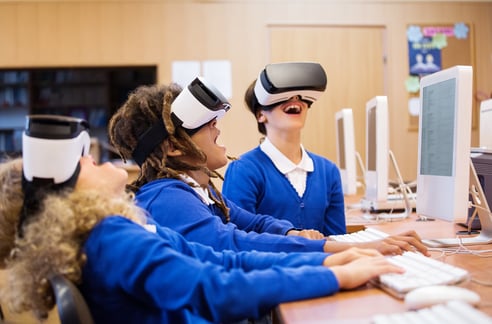
Inquiry Question: Will immersive VR technology redefine how we learn?
- What are the benefits and limitations of VR in learning?
- How is VR currently used in education?
- Can VR make online learning more interactive and engaging?
- Is VR accessible and affordable for most students?
- What is a healthy amount of VR integration in online education?
- Which areas of education can VR be used the most effectively?
Learning Goals:
- Learn how VR is currently being used in classrooms and online learning
- Identify the benefits of VR as a tool for learning (immersive and engaging)
- Explore the limitations such as cost, accessibility, privacy, etc.
- Do we see VR becoming a part of future education?
- Find the applications where VR can be used the most effectively
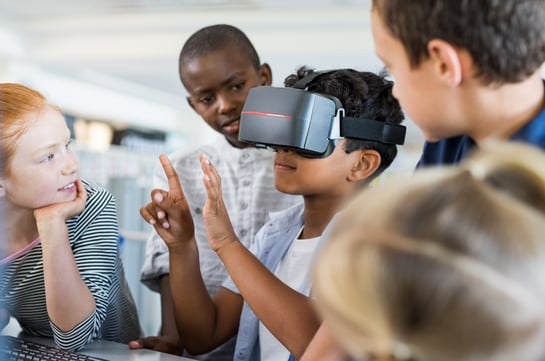
Weekly Plan:
Week 1: Introduce the topic and research examples of how VR is currently used as a tool for learning
Week 2: Research on the benefits of VR learning
Week 3: Explore the Challenges and limitations of VR learning
Week 4: Compare VR learning with traditional and online learning
Week 5: Reflect on whether VR can redefine education and learning
Expected Outcome:
By the end of this project, we aim to gain a better understanding of how VR can improve online education and learning outcomes. We will evaluate VR-assisted education from beneficial angles, such as better engagement, immersion, and interactivity, while also looking at how we can mitigate or prevent possible challenges, such as cost, privacy and safety, accessibility, and negative health impacts that may come with VR education. Ultimately, we would like to determine whether VR can effectively complement traditional and online learning strategies.
Possible resources:
Mauro, Katie. “Immersive VR Experiences for Middle and High School Students.” Edutopia, 1 Nov. 2022, www.edutopia.org/article/immersive-vr-experiences-for-middle-and-high-school-students/.
“Virtual Reality in Education.” UNESCO Digital Library, UNESCO, unesdoc.unesco.org/ark:/48223/pf0000372385.
“Virtual Reality in Schools.” The UNESCO Courier, UNESCO, 15 May 2023, courier.unesco.org/en/articles/virtual-reality-schools.
“Virtual Reality.” OER Commons, Institute for the Study of Knowledge Management in Education, oercommons.org/browse?f.keyword=virtual-reality.
“Go-to Resources for Virtual Reality and 360-Degree Content.” Edutopia, www.edutopia.org/article/go-resources-virtual-reality-and-360-degree-content/.
Bluum’s Insights Team. “Five Things to Know for Leveraging Real-World Benefits of Virtual Reality in Classrooms.” Bluum, 5 June 2024, www.bluum.com/resources/classroom-vr.